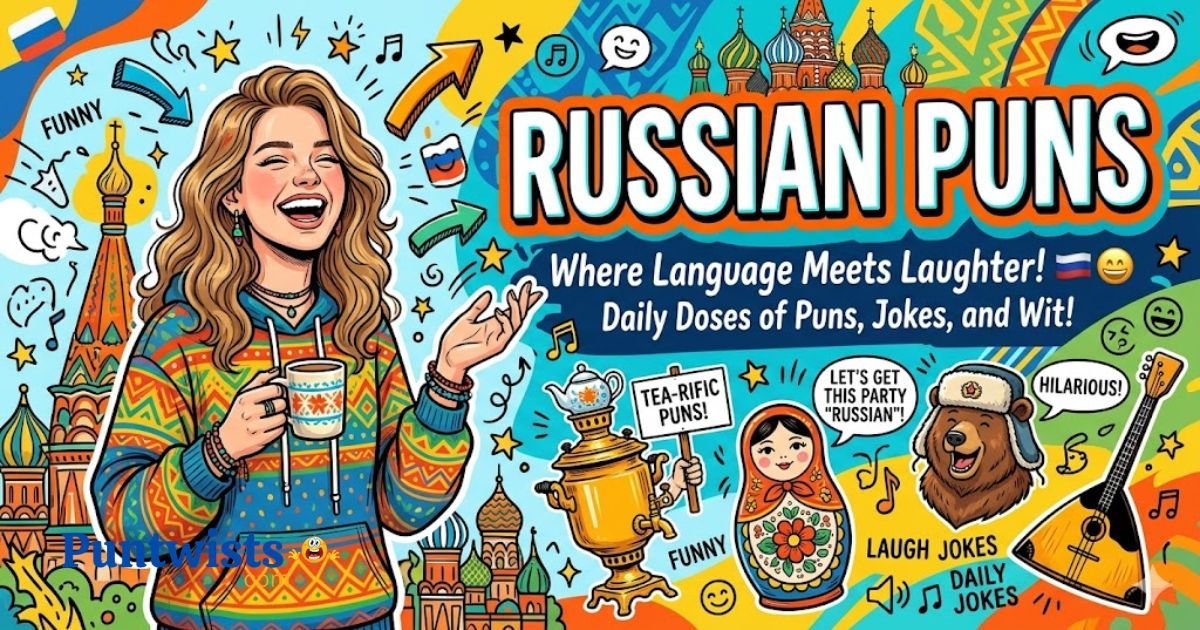
Russian Puns are where language gets mischievous, meanings flip upside down, and humor sneaks in through clever twists you never see coming. If you think jokes are universal, wait until you dive into the world of Russian wordplay, linguistic humor, double-meaning expressions, and phonetic comedy that turn simple phrases into unexpected laughter.
Russian puns usually work through clever linguistic layering, shifts, and contextual wordplay, where meaning changes depending on pronunciation, context, or cultural memory. Because Russian is rich in homophones, flexible grammar structures, and stress-sensitive pronunciation, even small changes in spelling or emphasis can completely transform a sentence into humor.
From playful nods to Siberian cold jokes, Matryoshka doll-style layered meanings, Soviet-era satire, and folklore-inspired humor, these puns prove that comedy in Russian is deeply tied to culture and language structure. Each joke often hides a clever reference, making it both a linguistic puzzle and a punchline.
In this post, we’ll unpack the funniest and smartest examples of Russian language humor, cultural puns, and expressive wordplay, giving you a fresh reason to appreciate how witty and creative the language can be.
Get ready, this is where meaning gets playful, layered, and unexpectedly hilarious.
Read Also : Steam Puns That Blow Your Mind (Clever Wordplay)!
Fun Facts About Russian Puns
Russian Puns are built on linguistic humor, phonetic wordplay, and semantic shifts, where even small pronunciation changes can change meaning completely.
Many jokes come from Soviet-era satire, folklore, and cultural references, making them both funny and historically rich. Because of this, they often feel like clever language puzzles instead of simple jokes.
The Benefits of Choosing Russian Puns
Russian Puns help improve understanding of language structure, semantics, and cultural context in an entertaining way.
They also boost thinking skills because of double meanings and wordplay challenges. On social media, they increase engagement since they are short, witty, and highly shareable
1. Top Trending Russian Puns
- What makes Russian Puns trend? They go viral because they use layered semantic wordplay and Matryoshka-style humor structures.
- Why do they spread online? Because cultural humor references make them instantly relatable and shareable.
- How do they work? Because meaning shifts through phonetic stress and linguistic ambiguity.
- What is the humor style? Because it blends Siberian humor with cold punchline delivery.
- Why are they clever? Because they rely on deep layering and hidden meanings.
- How do Kremlin jokes form? Because they use subtle political satire and contextual humor.
- What makes Matryoshka jokes funny? Because each layer reveals new linguistic humor meaning.
- Why are Russian words tricky? Because of homophones and flexible grammar structure.
- How do they go viral? Because of strong viral wordplay content appeal.
- What does Siberia add? Because it delivers cold humor and icy punchlines.
- Why are sentences playful? Because of syntax shifts and changes.
- How do they stay smart? Because they combine culture, irony, and wordplay humor.
Read More : 💜Ube Puns That Will Make You Purple With Laughter!
2. Funny Russian Puns Captions
- What are Russian Puns captions? They work because they use humor and wordplay hooks.
- Why do they go viral? Because strong cultural humor references make them relatable.
- How do they sound funny? Because of phonetic ambiguity and meaning shifts.
- What does Matryoshka represent? Because it shows a nested humor structure in captions.
- Why is grammar involved? Because it changes meaning using syntax humor effects.
- How do Moscow captions work? Because they add cultural humor complexity.
- What makes them catchy? Because of strong engagement-driven hooks.
- Why are snow captions popular? Because of Siberian humor aesthetics.
- How do they confuse users? Because of double meaning expressions.
- What makes them shareable? Because of the strong viral social humor structure.
- Why do they trend? Because they feel simple yet witty.
- How are they built? Because of short semantic wordplay design.
3. Knock Knock Russian Puns
- What are Russian Knock Knock Puns? They work because they use wordplay humor and phonetic twists.
- Why are they funny? Because they rely on unexpected shifts.
- How do they start? Because they use cultural or name-based setups.
- What does Ivan mean? Because it sets up linguistic humor punchlines.
- Why is Siberia used? Because it adds cold humor and exaggeration.
- How does Matryoshka work? Because it creates layered joke structures.
- What makes Kremlin jokes funny? Because of the political satire humor context.
- Why is grammar included? Because it shows syntax humor effects.
- How do punchlines work? Because of double meaning wordplay.
- What does snow add? Because it gives a cold humor twist effect.
- Why are names used? Because they create phonetic humor variation.
- How do they end? Because of surprising semantic punchlines.
4. Funny Russian Puns One-Liners
- What are Russian one-liner puns? They work because they deliver humor instantly.
- Why are they smart? Because meaning changes immediately.
- How do they work? Because of syntax and phonetic humor shifts.
- What does Siberia represent? Because it adds cold humor punchlines.
- Why is Matryoshka used? Because it shows layered joke meaning.
- How does grammar behave? Because it creates linguistic humor twists.
- What makes Kremlin jokes work? Because of the subtle political satire style.
- Why are homophones funny? Because they create dual meanings.
- How do words change? Because of semantic layering effects.
- What does snow do? Because it adds a weather-based humor tone.
- Why are they short? Because they deliver a fast impact.
- How do they stay sharp? Because of minimalist wordplay humor.
Read More : Laser Puns With Fun & Light-Based Wordplay!
5. Short Funny Russian Puns
- What are short Russian Puns? They work because they deliver a quick humor impact.
- Why are they effective? Because meaning is instantly understood.
- How do they work? Because of simple phonetic wordplay.
- What does Siberia add? Because it creates a cold humor tone.
- Why is Matryoshka used? Because it shows layered humor meaning.
- How does grammar fit? Because it shifts syntax humor structure.
- What makes them funny? Because of quick surprise effects.
- Why are homophones used? Because they create double meaning humor.
- How are they written? Because of minimal wordplay format.
- What does snow add? Because it gives a cool humor atmosphere.
- Why are they popular? Because they are easy to read.
- How do they work best? Because of fast semantic punchlines.
6. Clever Russian Puns for Instagram
- What are Instagram Russian Puns? They work because they use wordplay humor captions.
- Why do they perform well? Because of visual cultural humor appeal.
- How do they work? Because of short phonetic humor lines.
- What does Matryoshka mean? Because it creates a layered caption structure.
- Why is grammar used? Because it produces syntax humor twists.
- How does Moscow fit? Because it adds a cultural humor identity.
- What makes them viral? Because of engagement semantic hooks.
- Why is snow used? Because it creates a cold humor aesthetic.
- How do captions confuse? Because of double meaning wordplay.
- What makes them catchy? Because of the simple humor design.
- Why do they spread? Because they feel relatable.
- How are they built? Because of viral wordplay structure.
7. Best Russian-Themed Wordplay Jokes
- What are Russian wordplay jokes? They work because they use phonetic twists.
- Why are they smart? Because they hide multiple meanings.
- How do they work? Because of linguistic humor layering.
- What does Siberia add? Because it gives a cold humor effect.
- Why is Matryoshka used? Because it shows nested joke structure.
- How do bears fit? Because they create animal wordplay humor.
- What makes Kremlin jokes funny? Because of the political satire context.
- Why are homophones used? Because they create dual meanings.
- How does grammar help? Because it changes syntax humor flow.
- What makes vodka jokes funny? Because of cultural humor references.
- Why are they clever? Because of semantic depth.
- How do they stay funny? Because of cultural wordplay balance.
Read More: 💍Engagement Puns That’ll Put a Ring on Your Funny Bone!
8. Witty Russian Puns for Social Media
- What are social media Russian Puns? They work because they use humor posts.
- Why do they go viral? Because they are highly relatable.
- How do they work? Because of wordplay engagement hooks.
- What does Moscow add? Because it gives a cultural humor layer.
- Why is grammar used? Because it shifts meaning cleverly.
- How do captions succeed? Because of syntactic humor clarity.
- What makes them shareable? Because emotional humor triggers.
- Why is snow used? Because it adds a Siberian humor style.
- How do users react? Because they get instant humor recognition.
- What defines them? Because of the simple humor design.
- Why are they witty? Because they are short and sharp.
- How do they spread? Because of viral content behavior.
9. Russian Puns Reddit
- What are Reddit Russian Puns? They work because they use community semantic humor posts.
- Why are they popular? Because users enjoy breakdown humor.
- How do they work? Because of interpretation-based wordplay.
- What does Matryoshka mean? Because it shows a layered joke system.
- Why is Siberia used? Because it adds cold humor and exaggeration.
- How does grammar appear? Because it creates syntax humor discussions.
- What makes Kremlin jokes funny? Because of the political satire context.
- Why are homophones used? Because they create dual meanings.
- How do users engage? Because they enjoy semantic analysis.
- What makes threads funny? Because of interpretive humor layers.
- Why do they get upvotes? Because of clever linguistic humor.
- How do they spread? Because Reddit rewards wordplay creativity.
10. Moscow Puns
- What are Moscow Puns? They work because they use city-based cultural humor.
- Why are they funny? Because of urban irony and context.
- How do they work? Because of city wordplay.
- What does Moscow say? Because it creates city personality humor.
- Why is the Kremlin used? Because it adds satire.
- How do tourists react? Because of cultural humor, surprise.
- What makes them clever? Because of linguistic urban humor.
- Why is Metro used? Because it adds travel humor.
- How do they spread? Because of location-based relatability.
- What makes them viral? Because of geo-cultural humor appeal.
- Why are they engaging? Because they mix history and humor.
- How do they stay funny? Because of contextual wordplay balance.
Read More : 🎨Paint Puns That Color Your Mood With Laughter!
11. Russian Puns Names
- What are Russian pun names? They work because of phonetic wordplay naming humor.
- Why are they funny? Because names hide meanings.
- How do they work? Because of semantic identity twists.
- What does Ivan mean? Because it creates joke setups.
- Why is Bearislav used? Because it adds animal humor.
- How does grammar appear? Because it becomes part of names.
- What makes them clever? Because of linguistic creativity.
- Why do homophones matter? Because they create dual meanings.
- How are names built? Because of word blending humor.
- What makes them viral? Because of identity humor appeal.
- Why are they memorable? Because they sound familiar yet funny.
- How do they work best? Because of phonetic humor design.
12. Stalin Puns
- What are Stalin Puns? They work because of historical satire and humor.
- Why are they used? Because political irony creates humor.
- How do they work? Because of historical wordplay.
- What does Stalin represent? Because it becomes a satire reference.
- Why are jokes careful? Because of sensitive context humor.
- How does grammar fit? Because it obeys “rules” humorously.
- What makes them clever? Because of historical irony.
- Why are they funny? Because of contextual exaggeration.
- How do they spread? Because of satire interest.
- What defines them? Because of political humor structure.
- Why do they trend? Because of its dark humor appeal.
- How do they stay relevant? Because of historical wordplay balance.
13. Pink Russian Puns
- What are pink Russian Puns? They work because they mix aesthetics with wordplay humor.
- Why are they cute? Because they use a soft humor tone.
- How do they work? Because of the playful visual-linguistic blend.
- What does Matryoshka mean? Because it adds a layered charm.
- Why is snow used? Because it adds soft contrast humor.
- How does grammar appear? Because it becomes playful.
- What makes them viral? Because of aesthetic humor appeal.
- Why are they soft? Because of the emotional wordplay tone.
- How do they spread? Because they feel visually pleasing.
- What defines them? Because of the cute humor design.
- Why are they popular? Because they feel light and fun.
- How do they work best? Because of aesthetic + humor balance.
Read More: Bali Puns So Good They’re Shore to Impress!
14. Russian Puns in Russian
- What are Russian Puns in Russian? They work because of native linguistic wordplay.
- Why are they complex? Because pronunciation changes meaning.
- How do they work? Because of phonetic stress humor.
- What does grammar do? Because it shifts meaning constantly.
- Why are they funny? Because natives understand deep context.
- How does Matryoshka work? Because it adds layered meaning.
- What makes them clever? Because of native humor.
- Why are translations hard? Because humor depends on sound.
- How do they spread? Because of cultural context understanding.
- What defines them? Because of linguistic authenticity.
- Why do natives enjoy them? Because they feel natural.
- How do they work best? Because of phonetic + fusion.
15. Putin Puns
- What are Putin Puns? They work because of political wordplay humor.
- Why are they popular? Because of satire and cultural relevance.
- How do they work? Because of name-based humor.
- What does Putin represent? Because it becomes a humor anchor.
- Why are jokes shared? Because of political irony.
- How does grammar fit? Because it humorously obeys rules.
- What makes them clever? Because of contextual satire.
- Why are they viral? Because of cultural recognition.
- How do they spread? Because of political humor.
- What defines them? Because of the wordplay and satire mix.
- Why are they engaging? Because of name-based humor.
- How do they stay relevant? Because of political humor.
16. Clean and Family-Friendly Russian Jokes
- What are clean Russian Puns? They work because they use safe semantic humor without offensive content.
- Why are they popular? Because families enjoy light cultural humor references.
- How do they work? Because they rely on simple linguistic wordplay.
- What does snow represent? Because it adds a cold but wholesome humor tone.
- Why is Matryoshka used? Because it creates fun layered joke structures.
- How does grammar fit? Because it produces safe syntax humor effects.
- What makes them funny? Because of harmless surprise moments.
- Why are they easy? Because they use basic phonetic humor and clarity.
- How do kids enjoy them? Because they are simple and playful.
- What defines them? Because of wholesome cultural humor.
- Why do they spread? Because they are safe for all audiences.
- How do they stay engaging? Because of the positive wordplay humor style.
Read More : 🏰Knight Puns, (Funny , Clever & One-Liner)!
17. Punny Russian Quotes That’ll Crack You Up
- What are punny Russian quotes? They work because they mix wisdom with semantic humor twists.
- Why are they funny? Because they add cultural irony to classic sayings.
- How do they work? Because of linguistic reinterpretation humor.
- What does Matryoshka represent? Because it shows layered meaning structure.
- Why is grammar involved? Because it changes meaning creatively.
- How do quotes spread? Because of shareable semantic humor appeal.
- What makes them clever? Because of phonetic and cultural humor fusion.
- Why are they short? Because short lines increase impact.
- How do they stay funny? Because of wordplay and ironic balance.
- What does Siberia add? Because it creates a cold humor metaphor tone.
- Why do people share them? Because they feel smart and funny.
- How are they built? Because of the quote transformation style.
18. Flirty Russian Puns
- What are flirty Russian Puns? They work because they use playful semantic charm-based humor.
- Why are they attractive? Because of romantic wordplay and double meanings.
- How do they work? Because they mix linguistic humor with affection.
- What does Matryoshka mean here? Because it adds layered emotional humor.
- Why is Moscow used? Because it gives romantic cultural context.
- How does grammar flirt? Because it changes meaning playfully.
- What makes them cute? Because of the soft humor tone.
- Why is snow used? Because it adds cold-warm contrast humor.
- How do words flirt? Because of phonetic teasing effects.
- What defines them? Because of romantic wordplay structure.
- Why do they work? Because they feel playful and light.
- How do they spread? Because of the relatable emotional humor style.
19. Russian Puns for Tourists and Travelers
- What are Russian travel puns? They work because they use cultural semantic humor for tourists.
- Why are they funny? Because of language confusion and irony.
- How do they work? Because of phonetic misunderstanding humor.
- What does Matryoshka mean? Because it shows layered travel meaning.
- Why is Siberia used? Because it adds cold travel humor and exaggeration.
- How does grammar fit? Because it confuses travelers humorously.
- What makes them clever? Because of cultural context humor.
- Why are signs funny? Because of translation humor errors.
- How do tourists react? Because they experience wordplay confusion.
- What defines them? Because of travel-based humor.
- Why do they spread? Because travelers share funny moments.
- How do they stay useful? Because of relatable cultural humor content.
Read More: 💧Water Puns & Jokes That’ll Make a Splash on Instagram!
20. Silly & Sassy Russian Wordplay
- What is silly Russian wordplay? It works because it mixes sass with semantic humor exaggeration.
- Why is it funny? Because of playful tone shifts.
- How does it work? Because of linguistic humor exaggeration.
- What does Matryoshka mean? Because it adds layered sass.
- Why is grammar sassy? Because it changes meaning unpredictably.
- How do jokes sound? Because of phonetic humor attitude.
- What makes them silly? Because of intentional absurd wordplay.
- Why is Siberia dramatic? Because it exaggerates cold humor.
- How do words behave? Because they act playfully.
- What defines sass? Because of the tone-based humor style.
- Why do they work? Because they break expectations.
- How do they stay engaging? Because of bold humor style.
21. Cute Russian Puns
- What are cute Russian Puns? They work because they use soft semantic humor and charm-based wordplay.
- Why are they adorable? Because of the gentle emotional tone.
- How do they work? Because of simple playful language.
- What does Matryoshka mean? Because it adds cute layered humor.
- Why is snow used? Because it adds soft aesthetic humor.
- How does grammar fit? Because it behaves gently in jokes.
- What makes them sweet? Because of the light semantic humor style.
- Why are words cute? Because of the soft phonetic tone.
- How do they spread? Because they feel comfort.
- What defines them? Because of wholesome wordplay humor.
- Why are they loved? Because they feel easy and warm.
- How do they work best? Because of emotional balance.
22. Iconic Sayings with a Russian Twist
- What are Russian-twisted sayings? They work because they reshape famous phrases into semantic humor.
- Why are they iconic? Because of recognizable cultural references.
- How do they work? Because of clever reinterpretation.
- What does Matryoshka mean? Because it adds layered meaning depth.
- Why is grammar involved? Because it alters sentence structure humorously.
- How do sayings change? Because of linguistic adaptation humor.
- What makes them funny? Because of cultural irony.
- Why are they shared? Because they feel familiar yet new.
- How do they spread? Because of relatable humor transformation.
- What defines them? Because of the reinterpretation style.
- Why are they clever? Because they remix known wisdom.
- How do they stay engaging? Because of classic + humor fusion.
Read More : 🗺️Map Puns That’ll Have You Losing Your Way in Laughter!
23. Share-Worthy Russian Puns for Every Mood
- What are mood-based Russian Puns? They work because they match emotions with semantic humor expressions.
- Why are they shareable? Because they are highly relatable.
- How do they work? Because of emotional wordplay alignment.
- What does Matryoshka mean? Because it adds layered emotional humor.
- Why is Siberia used? Because it matches cold emotional tones.
- How does grammar fit? Because it adapts to mood shifts.
- What makes them funny? Because of emotional semantic humor balance.
- Why do they spread? Because people share feelings easily.
- How do users react? Because they connect emotionally.
- What defines them? Because of mood-based humor structure.
- Why are they viral? Because they fit every situation.
- How do they work best? Because of emotion + wordplay synergy.
How to Use in Everyday Life Russian Puns
You can use Russian Puns in daily chats, captions, and jokes to make conversations more fun and engaging. They work well on social media because humor and wordplay grab attention quickly. They’re also great icebreakers that add creativity and humor to everyday talk.
Conclusion
Wrapping up, Russian Puns show just how powerful linguistic humor, wordplay, and cultural references can be when blended together. From clever Matryoshka-style layered jokes to cold Siberian humor and sharp phonetic twists, each pun turns language into something playful and surprising.
As I explored these examples, I found myself appreciating how even small shifts in meaning or pronunciation can completely change the joke’s impact. That’s what makes this style of humor so engaging, it’s simple on the surface but smart underneath.
If you enjoyed this, I’d say keep an eye out for more Russian wordplay and humor, because there’s always another layer waiting to be uncovered.
FAQs About Russian Puns
1. What Are Russian Puns?
Russian Puns are jokes based on linguistic humor, phonetic wordplay, and semantic meaning shifts. They often rely on how pronunciation, stress, or context changes a word’s meaning, making the joke clever and layered.
2. Can I Use Russian Puns On Social Media?
Yes, you can use Russian Puns on social media because they boost engagement through short, witty, and shareable wordplay humor. They work especially well in captions, memes, and creative posts.
3. Are Russian Puns Family-Friendly?
Most Russian Puns can be family-friendly since many rely on simple linguistic humor and cultural references. However, some jokes may include satire, so it depends on the specific pun.
4. How Do I Make My Own Russian Pun?
You can create Russian Puns by playing with homophones, pronunciation changes, and semantic twists. Start with a simple Russian word and find meanings that shift when context or stress changes.
5. Why Are Russian Puns Popular With Travelers?
They are popular with travelers because they highlight cultural humor, language confusion, and local wordplay. This makes travel experiences more fun and memorable, especially in conversations and signs.
6. What Are Some Russian Slangs?
Some common Russian slang expressions include informal words used in everyday conversational humor and street language. They often reflect modern culture, youth trends, and casual communication style.
7. What Are Cool Russian Words?
Cool Russian words often stand out because of expressive sound, emotional meaning, and cultural depth. Many are popular due to their rhythm, uniqueness, and easy memorability.
8. What Does “Paka Paca” Mean In Russian?
“Paka paca” is a playful informal way of saying “bye-bye,” inspired by casual Russian pronunciation and friendly slang culture. It is commonly used in light, cheerful goodbyes.
9. What Are Some Cute Russian Phrases?
Cute Russian phrases express warmth and affection using simple, emotional, and culturally rich language. They are often used in greetings, messages, and friendly everyday conversations.
10. What are Russian Puns and why are they so popular?
Russian Puns are clever jokes based on linguistic humor, semantic wordplay, and phonetic shifts. They are popular because even small changes in pronunciation or context can create completely different meanings, making them fun and surprising.
11. Why are Russian Puns considered so clever?
They are considered clever because they rely on homophones, grammar flexibility, and layered meanings. This makes each joke feel like a mini language puzzle that rewards understanding of cultural and semantic humor.
12. Where do most Russian Puns come from?
Most Russian Puns come from folklore, Soviet-era satire, and everyday language use. These cultural and historical influences make the humor rich, contextual, and deeply rooted in Russian expression.
13. Are Russian Puns hard to understand for beginners?
Yes, they can be challenging because phonetic changes and semantic shifts often alter meanings. However, simple examples using basic wordplay humor and cultural references are easy and fun to learn.
14. How can I use Russian Puns in daily life?
You can use Russian Puns in social media captions, jokes, and casual conversations. They work well because semantic humor and wordplay make content more engaging, funny, and shareable.
Related Post :

Hi, I am Admin of website “puntwists.com.” I handle all the fun content here, bringing you the wittiest puns and funniest jokes. My goal is to make your day brighter with a twist of humour!